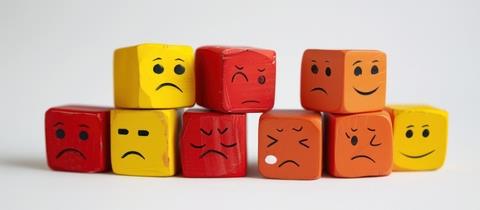
We have people around us who make us better and worse human beings. This is as true with family members as with practice team members. There are people we love to be around, people we can hardly tolerate, and people we are drawn to because – to be frank – they remind us of ourselves.
As leaders within our practice, we need to find ways to understand what makes different people tick and to appreciate and leverage the differences.
I must be honest; it is no easy task.
I realized that recently during a family wedding, when folks were chatting about family history and past family conflicts and drama. It occurred to me that work-team dynamics shift and change much faster than family dynamics. Within a family, it takes at least one generation for people and relationships to get over family grudges and for the next wave of adults to spring up from childhood filled with fresh ideas and opinions. However, within a veterinary practice, where staff members and doctors come and go in pursuit of new career opportunities, the mashup of personalities is ever-changing.
Each team member brings something uniquely beneficial to the table. Likewise, each comes to work with their own covert or openly shared drama or stresses. Even as I type this, chances are good that an employee is grappling with his life's purpose, and another is gloating about performing her first feline surgery since leaving vet school. Still another is juggling childcare issues with the need to be present for expanded hospital hours.
Without a doubt, different behaviors function in different ways and ultimately impact a practice team (for better or worse).
I had the opportunity to learn more about behavior styles during a recent strategic planning meeting with my fellow VHMA Board members. Prior to the two-day meeting, we all completed a behavior assessment supplied by the Effectiveness Institute, a learning and development company that focuses on creating and sustaining high performance at all organizational levels by improving the effectiveness of leaders and teams.
The results of my assessment did not surprise me; I was an Analyzer-Stabilizer. According to the report, “Analyzer-Stabilizers tend to work best in a peaceful and harmonious environment. Dissension, confrontation, or aggression disrupts their ability to perform. They can collect and analyze factual data and present their position in a logical way.”
Sounds like me. But here is the clincher: "Analyzer-Stabilizers like to work with one or two others, preferably people who think and operate in the same manner."
There lies the rub! It is doubtful that any of us are surrounded by practice team members who all think and operate in the same manner. Let’s be real!
I strongly believe there is something to be said for taking the time to understand what makes your people tick in order to understand the cult of personalities that is your team. So, here's what I would suggest you consider to improve your team's performance at your hospital:
- Consider a behavioral assessment for all your team members to see how you function together “in the big picture.” The Effective Institute assessment was excellent, but I have also had good luck with The Platinum Rule Behavioral Assessment. There are others. Find the one you like the best.
- Knowing that Boomers, Gen X, Millennials, and Gen Z all have their unique approach to work, it is essential to learn about their differences. VHMA often addresses this topic in webinars and conferences.
- Do not squeeze a round hole in a square peg. Everyone has their talents. Try to give your people responsibilities that take advantage of their strengths. For example, if a vet technician is gifted at creating social media content, then seek their help with social media content.
Keep an open mind.
- Do not draw conclusions about people based on their fashion sense or hair color. Your most valuable employee might just be that person!
Scott Zimmerman, BFA, CVPM
VHMA President
#PracticePulse